Image
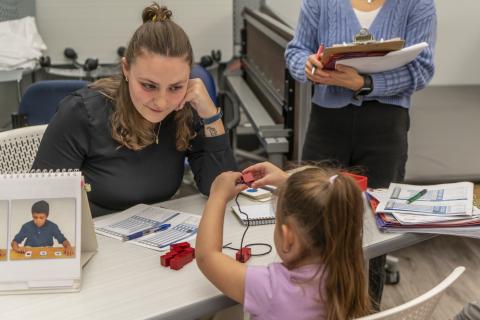
D'Youville University's Entry-Level Occupational Therapy Doctorate (OTD) prepares you to become a leader in the field of occupational therapy. This program is designed for students who want to enter the profession at the clinical doctoral level, combining clinical expertise with advanced skills in leadership, research, and advocacy.
Enter as a freshman and gain direct admission into the entry-level OTD program with no need to re-apply, provided you complete all prerequisites, maintain academic standards, and meet graduate admission standards.
If you already hold a bachelor's degree in another area of study, enter directly into the entry-level OTD program and complete a clinical doctoral degree in 3 years, over 9 semesters.
Includes Level I and Level II fieldwork and the doctoral capstone
Majority of coursework by distance learning, with scheduled residency weeks on campus
Courses & curriculum
A summary of the program structure, required experiences, and accreditation status.
The OTD curriculum builds on foundational sciences and occupational therapy principles, advancing into leadership, research, and specialized practice areas. Students complete:
| Course number & title | Credits |
|---|---|
| OT 700 Basic Skills I | 1 |
| OT 701 Introduction to Occupational Therapy | 2 |
| OT 702 Healthcare Advocacy | 2 |
| OT 703 Leadership in Occupational Therapy | 2 |
| OT 704 Research Literacy | 2 |
| OT 705 Interprofessional Collaboration | 2 |
| OT 706 Occupational Development I | 3 |
| OT 707 Occupational Development II | 3 |
| OT 708 Fieldwork Seminar I | 2 |
| OT 709 Medical and Social Conditions I | 2 |
| OT 710 Medical and Social Conditions II | 2 |
| OT 714 Interpersonal and Group Dynamics | 3 |
| OT 715 Research Methods | 3 |
| OT 718 Gross Anatomy | 3 |
| OT 719 Functional Anatomy | 3 |
| OT 720 Neuroanatomy | 3 |
| OT 721 Neurorehabilitation | 3 |
| OT 724 Fieldwork Seminar II | 2 |
| OT 729 Basic Skills II | 1 |
| OT 730 Psychosocial | 4 |
| OT 731 Community Practice | 4 |
| OT 740 Pediatric Clinical Skills I | 4 |
| OT 741 Pediatric Clinical Skills II | 4 |
| OT 743 Assistive Technology | 3 |
| OT 750 Adult and Geriatric Clinical Skills I | 4 |
| OT 751 Adult and Geriatric Clinical Skills II | 4 |
| OT 765 Management in OT | 2 |
| OT 780 Clinical Fieldwork I | 6 |
| OT 781 Clinical Fieldwork II | 6 |
| OT 785 Professional Issues | 2 |
| OT 811 Capstone I | 2 |
| OT 812 Capstone II | 3 |
| OT 813 Capstone III | 2 |
| OT 814 Capstone Experience | 8 |
| Total credits | 102 |
The Occupational Therapy program provides occupation-based programs with a faculty of scholars and clinicians dedicated to developing highly respected, dynamic practitioners and professional leaders.
D'Youville's OT program prepares students to assume these roles within educational, medical, and community-based settings. Emphasizing theory, scholarship, clinical skills, and professionalism, the programs foster competencies to meet the challenges of serving people in an ever-changing global environment.
Students receive a Doctorate in Occupational Therapy (OTD) upon achievement of the following:
The Entry-Level Occupational Therapy Doctorate program is a new program at D'Youville University and is seeking candidacy accreditation status by the Accreditation Council for Occupational Therapy Education (ACOTE) of the American Occupational Therapy Association (AOTA). The ACOTE accreditation standards provide the basis for the occupational therapy degree program competencies.
Accreditation Council for Occupational Therapy Education (ACOTE)
7501 Wisconsin Avenue, Suite 510E, Bethesda, MD 20814
Telephone: 301.652.6611
Web: www.acoteonline.org
The D'Youville Occupational Therapy program is also approved by the World Federation of Occupational Therapists. More information about WFOT can be found at www.wfot.org.
Following completion of all occupational therapy course requirements and fieldwork experiences, students can apply to take the NBCOT exam. NBCOT exam results for D'Youville can be found in Program Success Rates. After successful completion of this exam, the individual will be an Occupational Therapist, Registered (OTR). In addition, all states require licensure in order to practice; however, state licenses are usually based on the results of the NBCOT certification examination.
The Occupational Therapy program provides occupation-based programs with a faculty of scholars and clinicians dedicated to developing highly respected, dynamic practitioners, and professional leaders.
D'Youville's OT program prepares students to assume these roles within educational, medical, and community-based settings. Emphasizing theory, scholarship, clinical skills, and professionalism, the programs foster competencies to meet the challenges of serving people in an ever-changing global environment.
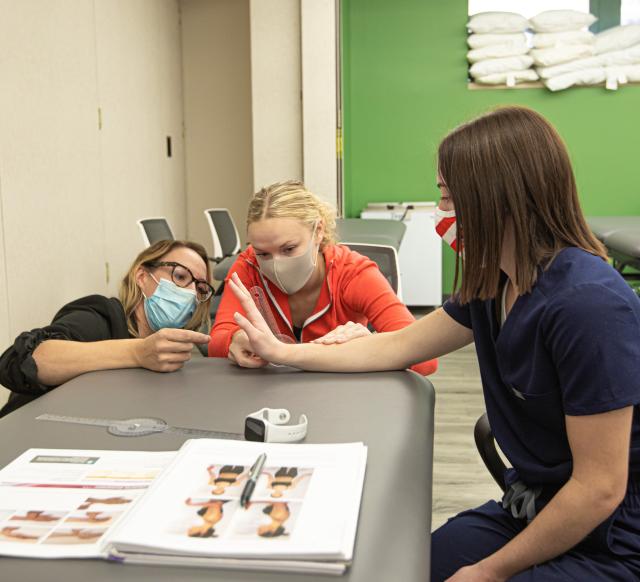
Occupational therapy education and practice is mentally, physically, and psychologically demanding. To succeed in the OTD curriculum and fieldwork experiences, students must meet essential performance standards in:
These expectations reflect ACOTE's requirements for professional competencies and program integrity. Reasonable accommodations are available, but all students must meet core competencies necessary for safe OT practice. Students will acknowledge the technical standards and complete an online learning module in program orientation to assess computer sufficiency. Students who do not meet basic standards will receive additional training.
| Current cost | Year 1 2026–2027 | Year 2 2027–2028 | Year 3 2028–2029 | Total 2026–2029 |
|---|---|---|---|---|
| Tuition | $44,075 | $43,290 | $22,800 | $110,165 |
| General fee | $250 | $250 | $250 | $750 |
| Wellness fee | $75 | $75 | $75 | $225 |
| Technology fee | $200 | $200 | $200 | $600 |
| SGA fee (hybrid) | $80 | $80 | $80 | $240 |
| Health professions fee | $110 | $110 | $110 | $330 |
| Estimated books & supplies | $3,900 | $3,900 | $3,900 | $11,700 |
| Transportation | $6,300 | $6,300 | $6,300 | $18,900 |
| Loan fees | $1,000 | $1,000 | $1,000 | $3,000 |
| Distance education fees | $0 | $0 | $0 | $0 |
| Total cost | $56,105 | $55,205 | $34,715 | $146,025 |
Illustration based on a 3 percent tuition increase annually; fees are subject to change. Books and supplies are an estimated indirect cost. According to FAFSA, cost of attendance is defined as the total amount of attending the program, which includes tuition and fees, books, supplies, transportation, loan fees, and fees associated with distance education.
Applicants complete prerequisite coursework in anatomy, physiology, psychology, and statistics.
Placeholder: add course numbers, credit hours, and minimum grades once the department confirms them.
A variety of financial aid options are available, including scholarships and graduate assistantships. Visit Cost & Aid to review graduate aid, or contact the Office of Financial Aid to talk through your options.
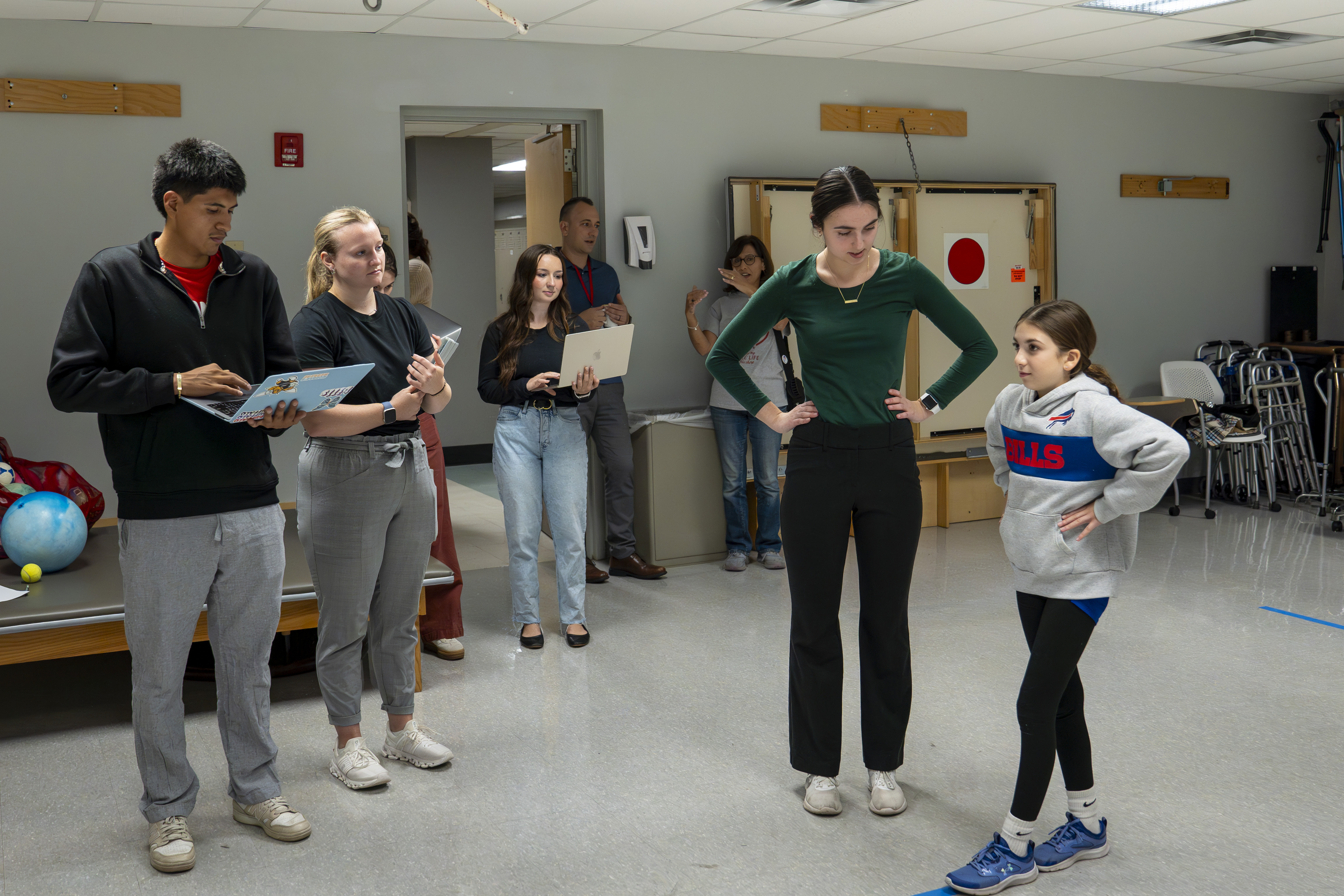
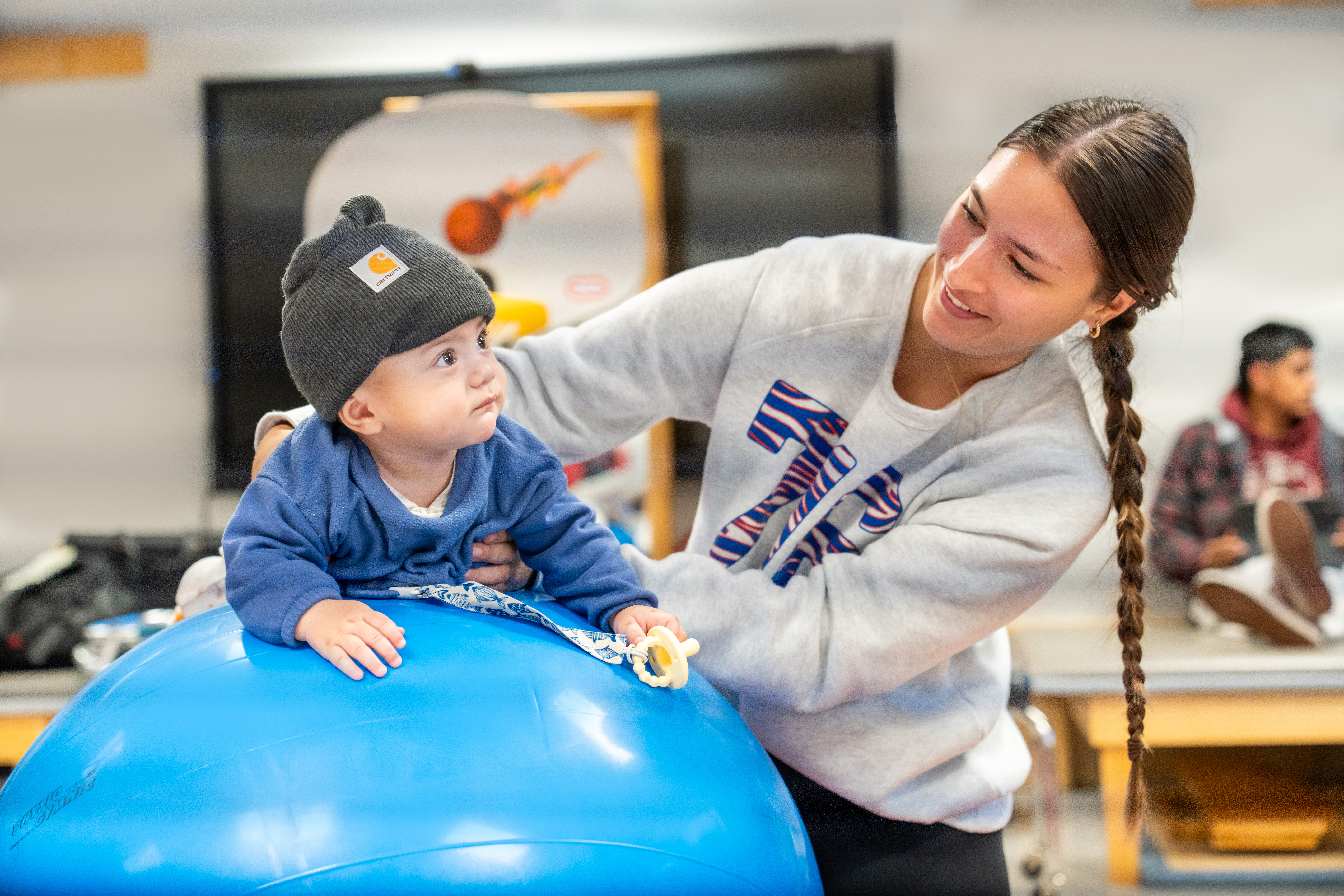
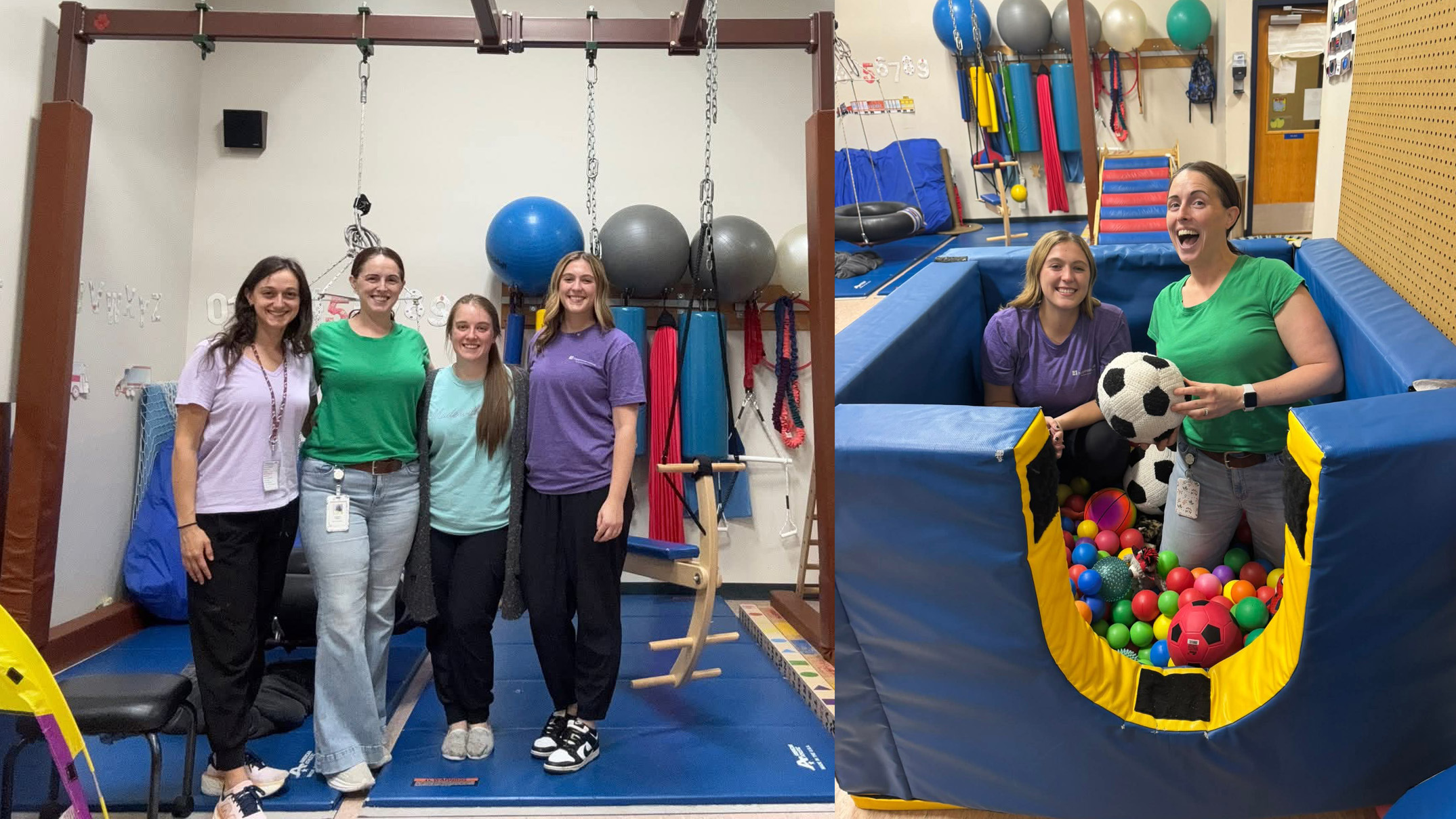
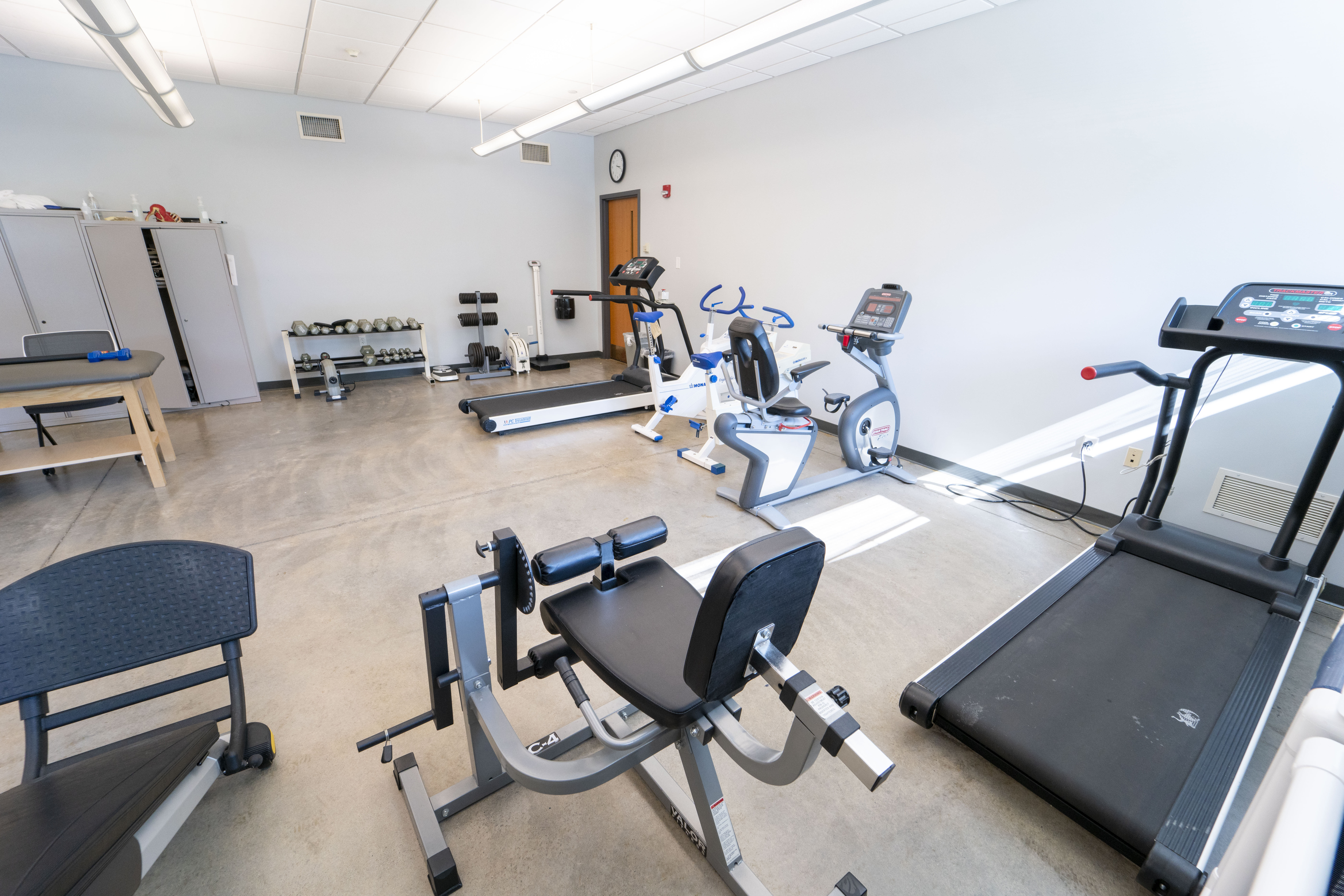
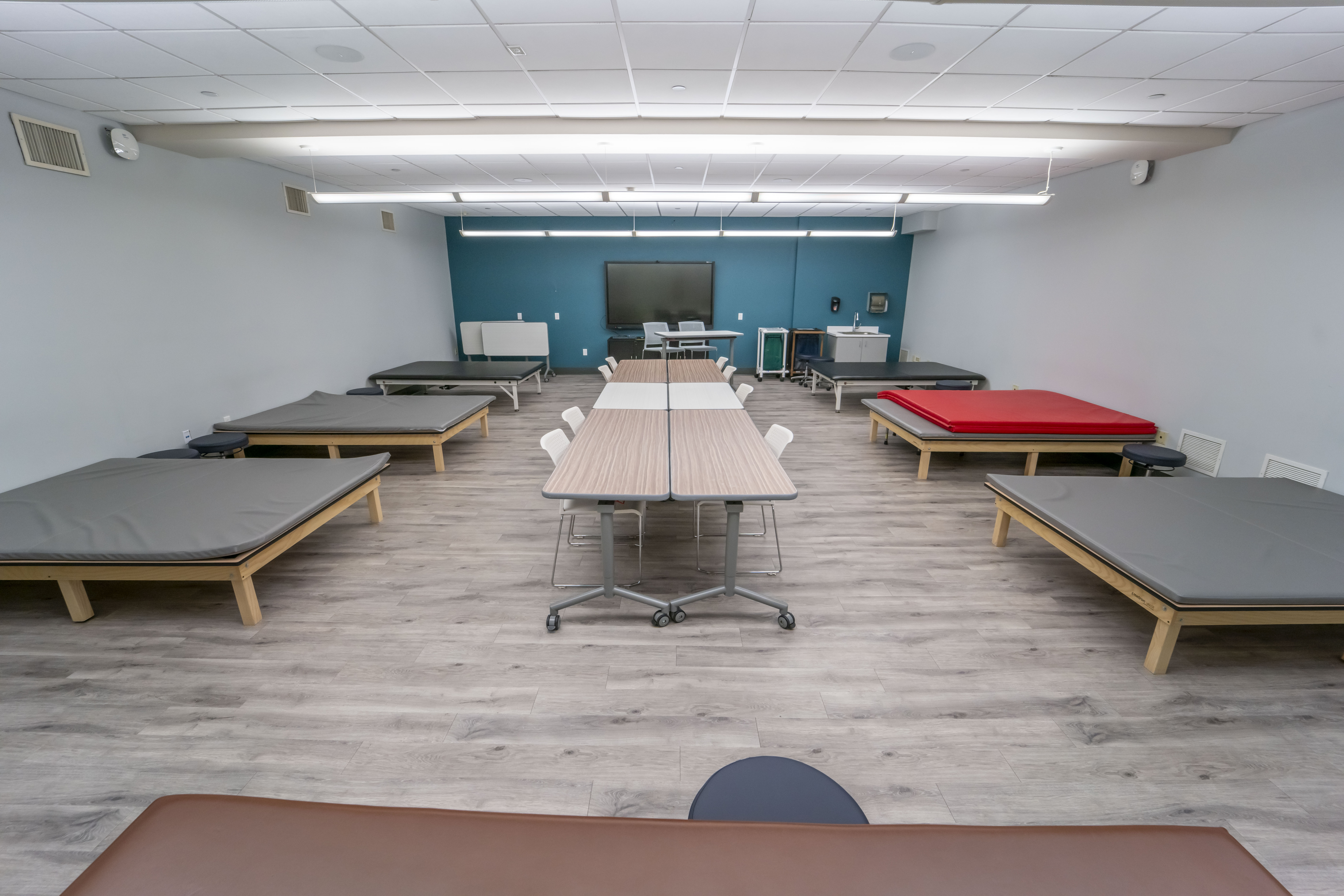
From state-of-the-art labs to clinical placements across Western New York, you'll get plenty of hands-on time even in a hybrid degree




Take the Next Step