Image
Begin a Journey that Transforms Lives
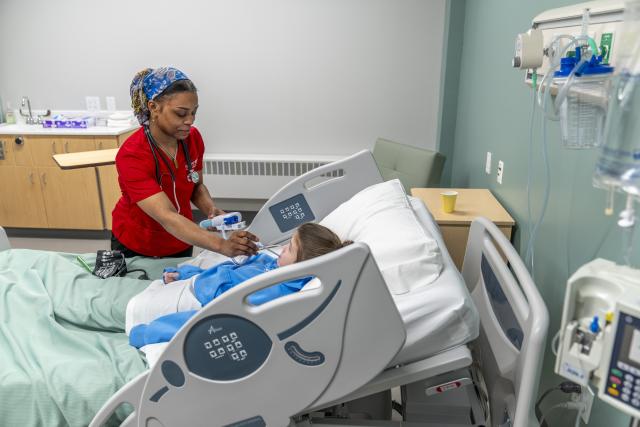
Turn your passion for helping people into a purposeful nursing career. The nursing program at D’Youville University is a CCNE-accredited program designed to provide the knowledge, skills, and experience needed to prepare for licensure in New York State. Nursing graduates are prepared to provide care to a wide range health settings, among people of various age groups and backgrounds.
Other Pathways to a BSN:
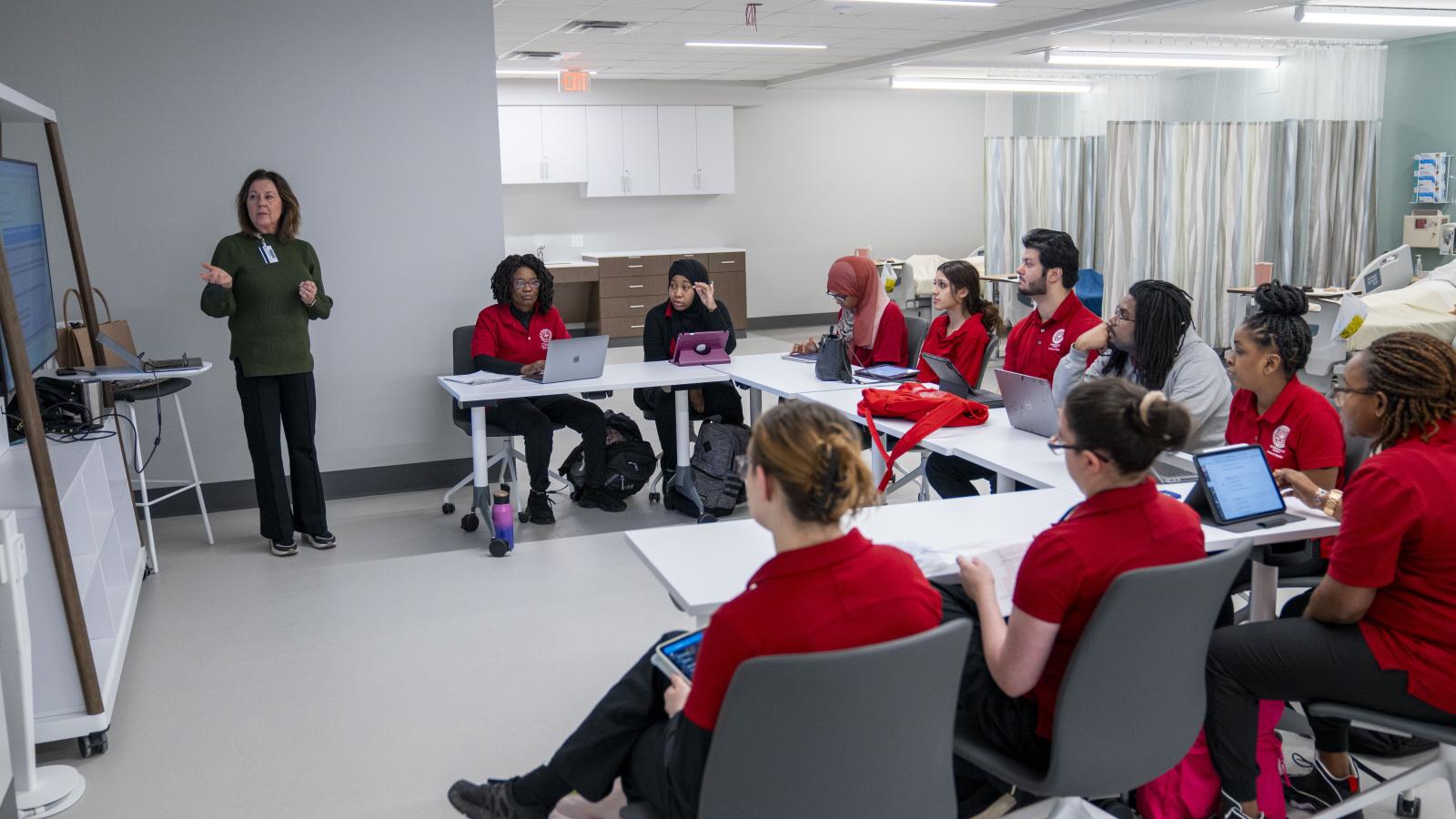
The Nursing (BSN) program develops the knowledge, skills, and experience needed for entry into the healthcare field. The program provides a meaningful integration of concept-based curriculum, simulation, clinical experiences and applied practice to ensure all students are prepared for their licensure examination.
We are focused on the future! That means relevant skills, purposeful degrees, and an education that you can count on.
Key Features
Your BSN is the first step to becoming a Nurse Practitioner.

One of the aspects I treasure most about D'Youville is the strong sense of community that permeates every corner of our organization. From the vibrant and diverse student body to the dedicated professors in the Nursing Program and other programs, I'm continually inspired by the collective spirit of support and mutual trust and friendship that grows during your time here that defines our campus. It's this sense of unity and belonging that truly sets D'Youville apart and fills our school with heart and soul. Without our tight-knit community, our campus would be lacking its most precious asset: the unwavering support and genuine care that we extend to one another.

I became a nurse because I wanted to work with physically handicapped children. After my first clinical experience, I knew I wanted to be in the hospital, working with patients and their families. I continued my education and worked as a Clinical Nurse Specialist, in orthopedics/trauma. It wasn't until we moved to a different state that I transitioned into teaching. This has provided me with the fulfilling opportunity to see my nursing students grow - from novice to experienced nurse.
Program Requirements
All Patricia H. Garman School of Nursing undergraduate students will be held to the academic standards noted below regardless of the year the student entered their respective nursing program unless noted in the policy.
Final grades for required NUR courses will be considered when implementing these policies.
A. Grade and G.P.A. Requirements:
To be in good standing in the Traditional BSN:
A student who takes an incomplete grade in a prerequisite course to a required nursing course will not be permitted to begin that nursing course until the pre-requisite course is completed with a grade C or higher (C+, B-, B, B+, A-, A) earned. The policy regarding incomplete grades must be followed and can be accessed at: Incomplete Grades.
For any NUR course with a theory and lab/simulation /clinical component, both the theory component and the lab/simulation/clinical component must be repeated if a passing grade is not achieved for either theory (minimum grade of C) and/or lab/simulation/clinical(s) (minimum grade of S).
Traditional BSN Program: A minimum average grade of 73% for course examinations is required prior to consideration of any other graded components of NUR courses. If a student’s cumulative exam average is less than 73% the letter grade for the course will be based on that exam average only. A student who does not satisfactorily complete the clinical component of any NUR course will receive a grade of F.
B. Progression Requirements:
1. A minimum grade of C must be attained in any required course for the major designated by NUR.
2. Students who fail to obtain a minimum grade of C in a course required for the major will not be permitted to enroll in any course for which that course is a prerequisite until the minimum C grade requirement for the pre-requisite course has been met.
3. Students are permitted to repeat a course required for the major only once. The procedures for repeating a course are explained in the University Catalog. www.dyc.edu/catalog/current/policies-procedures/repeating-course.aspx
4. Withdrawal policy for non-medical reasons: A student can withdraw (W) 2 times throughout their time in the nursing program. Repeated withdrawals from the same course are not permitted. More than two academic withdrawals is considered a lack of progress toward the degree. A request for a subsequent withdrawal requires review by the Admission, Progression, and Retention (APR) Committee.
C. Probationary Standing:
D. Ineligibility to Progress in Program:
1. A student may remain on probation for no more than two successive semesters. Failure to meet standards after two successive semesters on probation will result in the inability to progress in the student's respective undergraduate nursing program.
2. Students who have achieved less than a C in two courses required for the major, designated by NUR, will be deemed ineligible to continue in the program regardless of GPA.
3. Students who fail to achieve a minimum grade of C on a second attempt when repeating a course required for the major will be deemed ineligible to continue in the program.
4. Any student who withdraws from a clinical course more than once due to failure to demonstrate clinical competency will be deemed ineligible to continue in the program.
5. Students demonstrating an inability to deliver safe patient care or maintain professional conduct at any time are subject to course failure and may be ineligible to continue in the program.
E. Re-admission
1. Students dismissed for continued probation due to GPA can apply for readmission after one semester. They must meet the criteria for a student in good standing with the university and provide for the Undergraduate Admissions, Progression, and Retention Committee a plan of action for their success in the program.
2. Students who have been dismissed for unsafe practice or unprofessional conduct will not be eligible for re-admission.
3. Decisions regarding readmission are made by the Nursing Undergraduate Admissions, Progression, and Retention Committee based on readmission policies and potential for academic success.
4. Students dismissed for achieving a grade of less than a C in two major courses designated by NUR may re-apply for readmission one calendar year (two semesters) after being deemed ineligible to continue in the program. They must meet the criteria for a student in good standing with the university and provide for the Undergraduate Admissions, Progression, and Retention Committee a plan of action for their success in the program.
5. Students reinstated following determination of ineligibility to progress will be on probation for one semester provided they maintain a minimum GPA of 2.5. Any grade below C in a course required for the major following re-admission will result in the inability to continue in the program with no option for re-admission. Two successive semesters on probation following re-admission will result in the student being deemed ineligible to continue in the nursing program with no option for readmission.
Students enrolled in the nursing program are expected to exhibit professional behavior, demonstrating responsible and mature conduct in both academic and clinical environments. Professional behavior expectations relate not only to face-to-face interactions but to actions and interactions in the electronic/ online environment as well. Unprofessional conduct will not be tolerated. Regardless of previous grades earned, unprofessional conduct may result in failure in and/or dismissal from the course and/or program. Disciplinary action will be at the discretion of the course and/or the PHG School of Nursing faculty. At a minimum, in conjunction with course faculty/coordinators and Program Directors, an Action Plan will be completed and the student will be referred to the Student Conduct Committee. Actioned deemed to be of a serious nature may be referred to the University level Conduct Committee.
Pre-licensure students must complete all steps in conjunction with each of the required nursing courses in preparation for the NCLEX-RN exam. This includes but is not limited to, all testing, remediation, workshops, and self-study sessions. A testing fee will be charged to each student per semester.
Admissions Requirements
Not Required (utilized in a holistic review for admission if provided):
*Transfer students who have been dismissed from other nursing programs are not eligible for admission*
Not Required (utilized in a holistic review for admission if provided):
Our online RN to BSN Program is designed for an associate degree or diploma-prepared professionals seeking a baccalaureate degree in nursing.
Please note: Students that are borderline academically and failing to meet all of the minimum Admissions Standards to the School of Nursing, may be reviewed by the Undergraduate School of Nursing Admission, Progression, and Retention Committee to determine acceptance into the program. All decisions of this committee are final.
In order to further develop your clinical skills, you may have the opportunity to participate in an internship during the summer following your junior year. Not only will these internships provide you with invaluable clinical experience, but often students discover that the internships they participated in during their training lead to employment after graduation. Students preceding you have participated in internships at the following organizations (among others):
Additional Program Information
Careers in Nursing
The shortage of physicians and nurses in the United States and around the world is very well recognized. As the demographics of countries increasingly shift toward aging populations, societies are experiencing a rise in chronic conditions, placing stronger demands on the healthcare sector. These conditions are driving the strong demand for more high-quality professionals in the workforce.
Registered Nurse (RN)
Registered Nurses play a critical role in patient care by providing hands-on support, emotional reassurance, and technical expertise. They assess patients’ conditions, administer medications, monitor progress, and educate patients and families about managing illnesses or injuries. RNs work in diverse settings, including hospitals, clinics, schools, and long-term care facilities, and often collaborate with interdisciplinary teams to deliver optimal care. With additional certifications and experience, RNs can specialize in areas such as pediatrics, critical care, or oncology, further enhancing their career prospects and contributions to healthcare.
At the completion of the program, graduates of the baccalaureate programs will be able to:
D’Youville students benefit from the close relationships that the institution has developed over the years with the region’s top-ranked hospitals and healthcare organizations.
Your clinical experience may take place at any of the following regional facilities:
D'Youville University’s Patricia H. Garman School of Nursing is accredited by the Commission on Collegiate Nursing Education (CCNE). Possessing CCNE-accreditation is a sign to employers that you have received instruction under rigorous standards. Graduates of this program will be prepared to succeed in their respective certification examination and further demonstrate their knowledge and experience to their future employers.
As a graduate of the BSN program, students will be eligible to take the NCLEX-RN exam to become licensed as Registered Nurses. This licensure is essential for providing safe, effective care across a wide range of healthcare settings.
*Bureau of Labor Statistics, U.S. Department of Labor, Occupational Outlook Handbook, Registered Nurses,
at https://www.bls.gov/ooh/healthcare/registered-nurses.htm (visited July 04, 2026).
Contact Admissions