Image
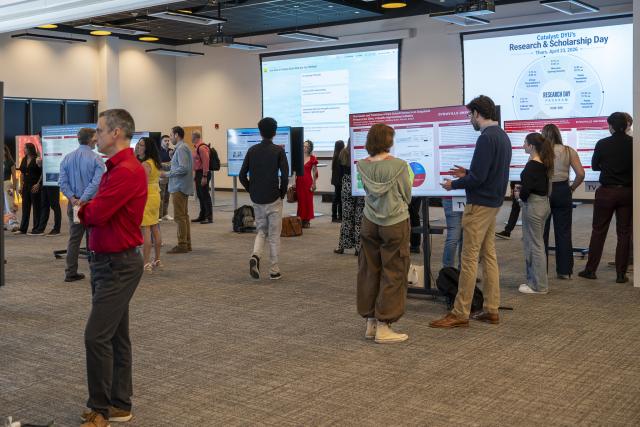
The Health Professions Hub was the central venue for Catalyst, D’Youville University’s annual research day. This year’s event brought together faculty, staff, students, and community partners to present original research, creative scholarship, and new teaching innovations.
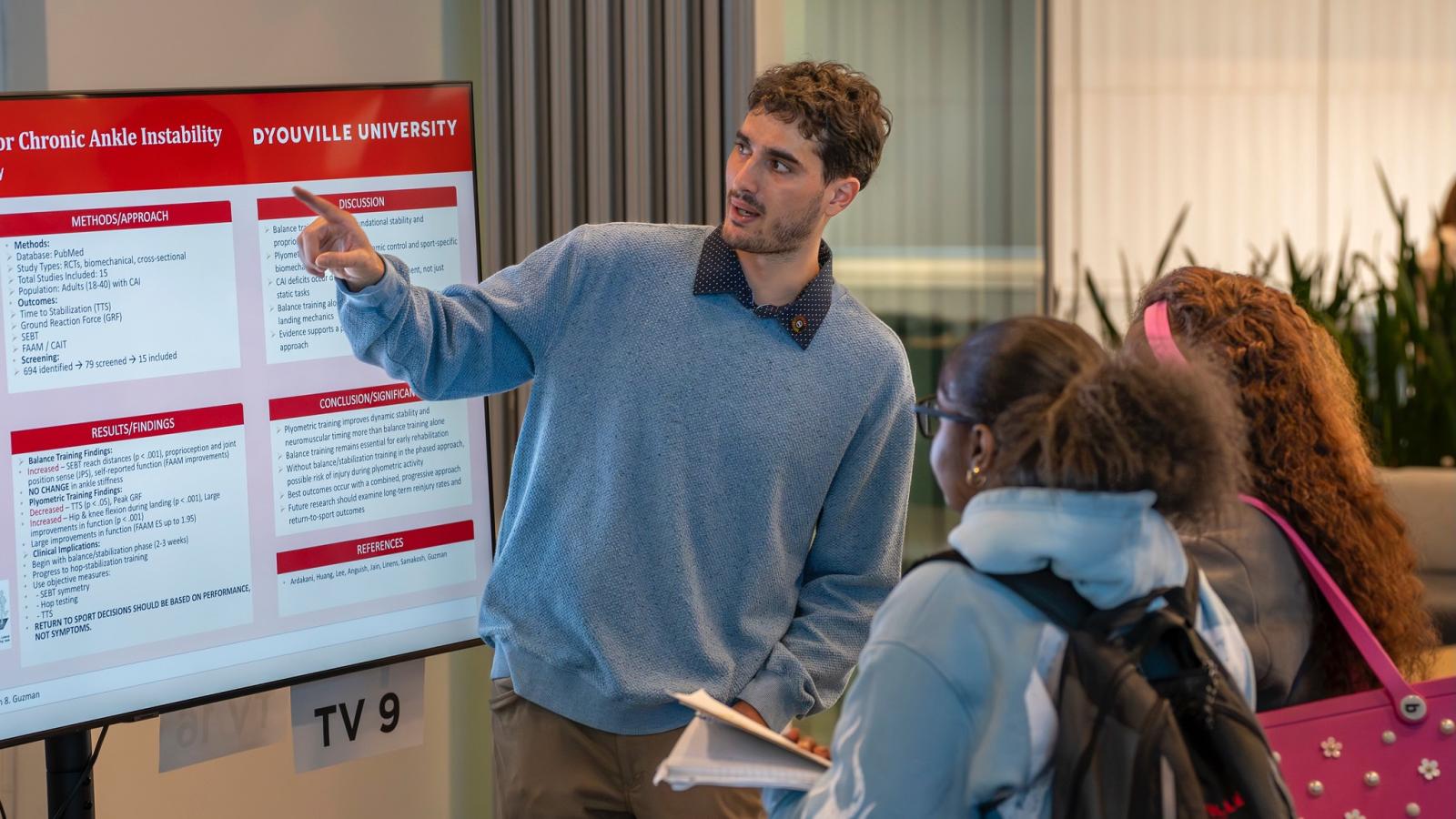
The sheer range of inquiry on display was a testament to the diverse curiosity of the DYU spirit. In one corner, you might find a deep dive into environmental biology with The Effect of Fluridone on Hydrilla; in another, educational psychology strategies #1 Professor Influencer: How Taylor Swift and Parasocial Psychology Can Improve Learning Outcomes. Whether it was the clinical precision of Plyometric vs. Balance Training or the timely relevance of the Digital Dialogue on GLP-1 Medications, Catalyst proved that D’Youville is about finding solutions for the challenges that we face in the world today.
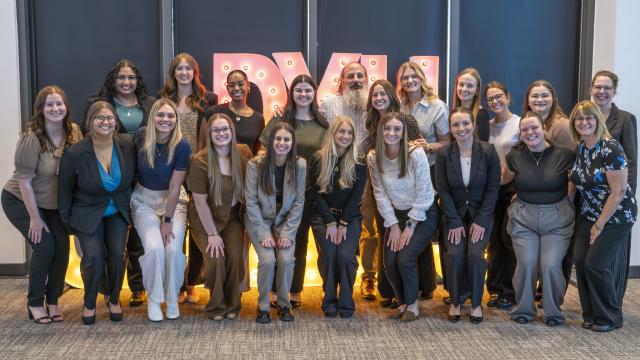
With over 90 presentations and more than 100 presenters, the event utilized a mix of in-person poster sessions and concise three-minute talks. A virtual component was also integrated into the schedule, allowing the university’s online research community to present their findings and answer questions in real time alongside on-campus participants.
The event was organized by the Office of Sponsored Programs and Research (OSPR), which continues to prioritize the growth of the university’s research culture.
“Hosting Catalyst through the OSPR is a highlight of our academic year,” said Lindsey Jakiel Diulus, Executive Director of Sponsored Programs and Research. “There is an incredible energy that comes from seeing our students, faculty and staff showcase their hard work. We are thrilled to provide a platform that honors this level of intellectual curiosity and strengthens the collaborative spirit across all disciplines at D’Youville.”
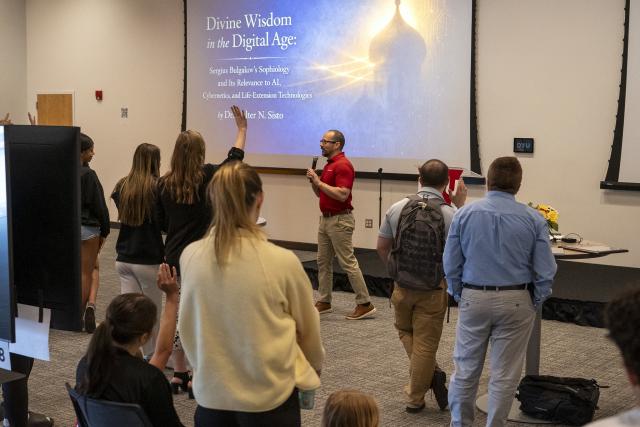
By providing a professional forum for these projects, Catalyst highlights D’Youville’s commitment to evidence-based practice and interdisciplinary collaboration.
What made these talks especially memorable was not just the depth of the ideas, but the energy, storytelling, and confidence each presenter brought to the stage. Below, you can read short reflections from this year’s winners.
3-Minute Talk Winner: 1st Place
"My project is about making it easier for students to learn from real human brains. In many schools, students have to rely on textbooks or plastic models, which can only show so much. Real human specimens offer a much deeper understanding, but they are often very expensive and difficult to access. This project was inspired by a high school student who asked: what if more students could have the chance to study real human brains early in their education? By finding ways to reduce cost and improve access, this work aims to give more students meaningful, hands-on learning experiences and help them build a stronger foundation for their future in healthcare."
3-Minute Talk Winner: 2nd Place

"Restoring damaged ecosystems requires an understanding of what healthy ones look like. Fortunately, archival sources like journals, travel narratives, and survey records can offer us a snapshot of an area before it became developed or polluted. I have located four books of survey field notes that are helping to reconstruct the environment of what is now South Buffalo and West Seneca. This area was once part of the Buffalo Creek Reservation, so the Holland Land Company never surveyed it as they did the rest of Western New York. After the reservation was dissolved, through a coercive treaties, the land was sold to a German religious group who later moved to Iowa. When I contacted the Amana Heritage Society in Iowa, it turned out they had a treasure trove of materials from the period the group was in New York. These documents are now able to be used to geolocate specific trees and help us to better understand Seneca land management strategies, which in turn will allow better restoration efforts to take place.
There is so much that can be done with these records. I will likely spend years transposing data and working with collaborators to create maps and run statistical analyses. That certainly made condensing this project into three minutes a real challenge! As I often tell students, it’s easy to write a long paper, but it’s challenging to write a short one. This exercise has already helped me to sharpen the key questions and stakes of this project – which are crucial steps in conducting any kind of research."
3-Minute Talk Winner: 3rd Place
"My project, Cutting Off the Tails: How AI Flattened My Grading Curve, examined what happens when generative AI is intentionally integrated into a core biostatistics assignment rather than prohibited. Over the past year and a half, I watched students increasingly turn to tools like ChatGPT to analyze research articles and answer homework questions. It quickly became clear that “banning” AI was a losing battle. Instead, I accepted that we must teach students to thrive in the world they are entering, not the one we grew up in. Knowing both the potential and the limits of AI, I redesigned my assignment so students first completed it independently, then compared their work to an AI-generated response, and ultimately composed their final answers. The results were surprising: AI flattened my grading curve! In my talk, I explained this using a haircut analogy. My slide was titled “AI gave my normal curve a haircut” and featured the head of a woman with braided hair arranged to resemble a normal distribution. I also braided my own hair and used it as a prop to show how the “tails” of the grading distribution were cut off once AI use was required. Results showed that while struggling students benefited from using AI as a tutor and were able to avoid failure, top, performing students sometimes trusted flawed AI responses and hallucinations. But just as cutting off braids does not remove the head - or the brain - using AI does not replace critical thinking. This work matters because it highlights our real task as educators: teaching students how to critically evaluate and responsibly use AI, rather than trying to eliminate it from learning.